
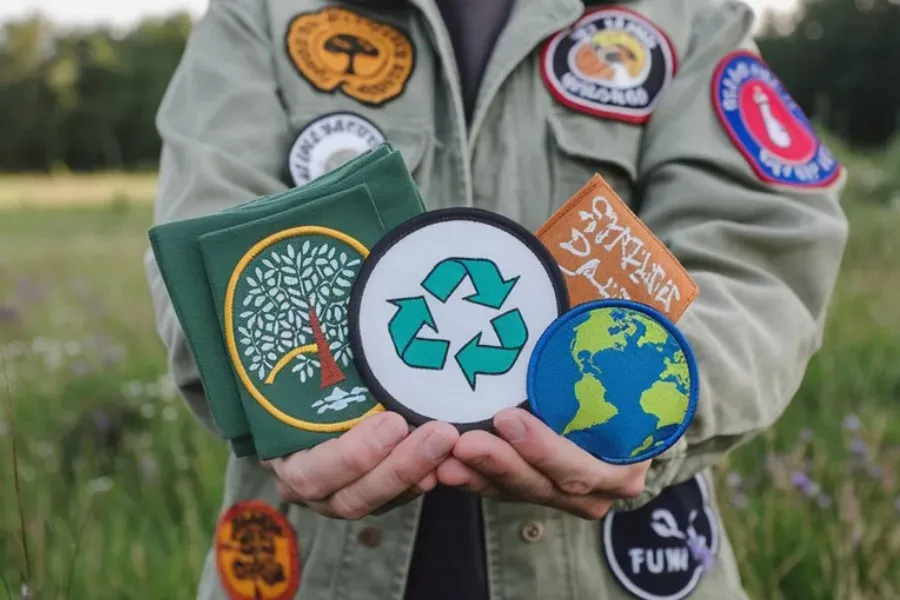
Sustainable patches offer more than decoration; they signal a brand’s environmental values with every stitch. Designed to withstand washing, sun exposure, and daily wear, they rely on carefully chosen materials that minimize waste and maximize durability, aligning with eco-friendly patches principles. Choosing fabrics with recycled content, such as recycled fabric patches, and exploring biodegradable patch materials helps brands reduce landfill impact while maintaining appeal. Embroidery threads that are colorfast and derived from responsible sources, paired with green manufacturing practices, further reduce environmental impact while preserving visual quality. By combining aesthetics with responsible production, sustainable patches become a practical option for brands seeking credibility and circular fashion alignment.
Within the trade, these textile emblems are often framed as eco-conscious fabric badges crafted from low-impact materials. They rely on upcycled or renewable inputs, efficient dyeing, and options designed for end-of-life recovery, aligning with circular design principles. Brands build trust through transparent material disclosures, third-party certifications, and lifecycle data that help customers verify sustainability claims. Viewed as sustainable badges or environment-friendly emblems, the core idea remains: durable, visually appealing patches that support responsible production and responsible consumption.
Sustainable patches: Designing for Durability and Circularity
Sustainable patches are not merely decorative; they embody a circular mindset by prioritizing materials and processes that minimize harm across extraction, production, use, and end-of-life. This approach aligns with eco-friendly patches and green manufacturing practices, delivering patches that perform while reducing environmental impact.
To translate this into practice, designers should emphasize durability and end-of-life considerations. Opt for fabrics with high recycled content and long-lasting finishes, and choose backing and adhesives that ease recycling or repurposing after a garment’s life. By integrating these principles, brands can deliver patches that remain visually appealing through many washes while supporting circular fashion goals, a core tenet of sustainable patches.
Material Choices for Eco-Friendly Patches: From Organic Cotton to Recycled Fabrics
The fabric base sets the patch’s long-term environmental footprint. Organic cotton twill, hemp, and linen offer lower pesticide use and reduced water demand compared with conventional cotton, while blends with recycled polyester from post-consumer bottles support recycled fabric patches and reduce virgin fiber demand. These options help advance eco-friendly patches without compromising durability.
Beyond the base, consider backings and embroidery threads that minimize waste and emissions. Selecting materials with high recycled content, low-toxicity dyes, and compatible adhesives can further reduce the patch’s footprint. Using embroidery threads made from cotton or recycled polyester complements the fabric choice and aligns with green manufacturing practices and the broader push toward sustainable patches.
Dyes, Finishes, and Threads: Reducing Chemicals in Embroidery and Patches
Dyeing and finishing methods greatly influence water use and chemical load. Fiber-reactive dyes and low-water or waterless screen-printing technologies can substantially cut water usage, while embroidery threads made of cotton or recycled polyester help minimize environmental impact. These choices reinforce the value proposition of eco-friendly patches.
Adhesives and finishes also matter: water-based inks and low-VOC finishing steps reduce emissions and improve worker safety. When combined with sustainable thread choices, these practices support green manufacturing practices across patch production and strengthen claims for sustainable patches in a transparent supply chain.
Biodegradable Patch Materials and End-of-Life Scenarios
Biodegradable patch materials—often bio-based polymers or natural fiber composites—offer potential end-of-life pathways, but they may require industrial composting and do not always degrade in home washing machines or landfills. The best practice is to pair durable design with clear disposal guidance to help consumers know whether to remove the patch before composting or recycling and whether there are take-back programs.
Design strategies should proactively address end-of-life. If a patch can be separated from a garment for recycling, or repurposed into new patches, it extends product life and reduces waste. Providing straightforward disposal instructions complements the goal of sustainable patches and helps customers participate in circular fashion workflows.
Manufacturing Footprint: Green Manufacturing Practices Across Patch Production
Green manufacturing practices are realized through efficient production lines that minimize scrap, reuse trimmings, and recycle cutoffs. Precision cutting, smart nesting, and automated processes reduce waste and energy use, while scrap materials can be repurposed or donated to upcycling initiatives, turning waste into value.
Maintaining environmental performance also hinges on water and energy management. Opting for renewable electricity where possible, implementing closed-loop dye baths, and using water-based adhesives can significantly cut CO2 and chemical emissions. Transparency through certifications (OEKO-TEX Standard 100, GOTS, Bluesign) and lifecycle tools like BOMs and LCAs further strengthen trust in the sustainability of patches.
Lifecycle, End-of-Life, and Circularity: Extending Garment Life with Patches
End-of-life thinking should influence patch design from day one. Patches that can be easily removed or repurposed, or that support modularity, help extend a garment’s life and reduce waste. Designing with recyclability in mind aligns with circular fashion goals and demonstrates how sustainable patches can remain attractive and functional over time.
Repairability and upcycling are important value drivers. By avoiding overly permanent glue systems and choosing materials with predictable aging properties, patches can be repaired or transformed into new patches for jackets, bags, or other textiles. Transparent certifications and supplier disclosures further build consumer trust in sustainable patches and the broader sustainability narrative.
Frequently Asked Questions
What makes Sustainable patches truly sustainable?
Sustainable patches minimize harm across extraction, manufacturing, use, and end-of-life by using renewable or recycled inputs, limiting toxic chemicals, and designing for durability and recyclability. This approach aligns with eco-friendly patches and green manufacturing practices to reduce environmental impact while maintaining quality.
What fabric options support sustainability in Sustainable patches, and how do they relate to recycled fabric patches?
Fabric bases like organic cotton twill, hemp, and linen (including blends with recycled polyester from post-consumer bottles) reduce water use and chemical loads compared with conventional fabrics. Using recycled fabric patches helps divert waste from landfills and aligns with the eco-friendly ethos behind Sustainable patches.
How do dyes, finishes, and embroidery threads affect the sustainability of Sustainable patches?
Choosing water-based adhesives, low-VOC finishes, and fiber-reactive dyes reduces pollutants and water use, while waterless printing lowers chemical load. For embroidery, selecting cotton or recycled polyester threads supports durability with fewer hazardous additives, keeping patches aligned with sustainable goals.
What end-of-life options exist for biodegradable patch materials in Sustainable patches?
Biodegradable patch materials can degrade under industrial composting, but not all biodegrade in home washing machines or landfills. Design for removal, recycling streams, or take-back programs helps ensure end-of-life options match the patch’s materials, backed by clear disposal guidance.
What practical design tips help reduce waste in Sustainable patches (including recycled fabric patches)?
Prioritize fabrics with high recycled content, choose thread colors to minimize dye waste, standardize backing thickness, and optimize shapes to reduce waste in production. These steps support circular fashion and align with the goals of Sustainable patches.
How can customers verify sustainability claims for Sustainable patches and related terms like eco-friendly patches?
Look for third-party certifications such as OEKO-TEX Standard 100, GOTS, Bluesign, and documented BOMs or life-cycle assessments. Transparent disclosure of materials, suppliers, and manufacturing practices—i.e., green manufacturing practices—helps verify claims about Sustainable patches.
| Aspect | Key Points |
|---|---|
| Core sustainability idea | Choose materials and processes that minimize harm across extraction, manufacturing, use, and end-of-life. Guiding principles include using renewable or recycled inputs, minimizing toxic chemicals, designing for durability, and planning for responsible disposal or recycling. |
| Patch materials | Base fabrics include organic cotton twill, hemp, linen, and blends with recycled polyester from post-consumer bottles. Organic cotton/hemp reduce pesticides and water use; recycled fabric patches divert waste and offer a distinct look. |
| Backings, dyes & adhesives | Use water-based adhesives and low-VOC finishes; explore biodegradable backings or paper-backed options. Fiber-reactive dyes and low-water or waterless printing reduce water and chemical use; sustainable embroidery threads resist fading with fewer chemicals. |
| End-of-life options | Biodegradable materials can degrade in industrial composting, but not always in home washing or landfills. Design for disposal and consider take-back programs or recycling compatibility. |
| Design & manufacturing | Aim for high recycled content, minimize dye waste, standardize backing thickness. Green manufacturing includes waste reduction, lean cutting, water-based inks/adhesives, and renewable energy or closed-loop dyeing. |
| Certifications & transparency | Pursue standards like OEKO-TEX Standard 100, GOTS, Bluesign; publish BOMs or LCA results; share supplier audits to build trust. |
| Lifecycle & circularity | Design patches for repair, demountability, or reuse on new garments; enable easy removal and potential upcycling. |
| Cost dynamics | Higher upfront costs can be offset by longer garment life, reduced waste disposal, and consumer willingness to pay for transparency and verification. |
Summary
Conclusion: Sustainable patches demonstrate that small design decisions can have large environmental impacts when scaled across millions of garments. By prioritizing eco-friendly patch bases, low-impact finishes and adhesives, and thoughtful end-of-life options, brands can reduce water use, chemical loads, and waste. Certifications such as OEKO-TEX, GOTS, and Bluesign, along with transparent BOMs and life-cycle assessments, help verify claims. When designed for durability, repairability, and recyclability, patches can be stylish, long-lasting, and aligned with circular fashion goals—proving that Sustainable patches can coexist with quality and design.