
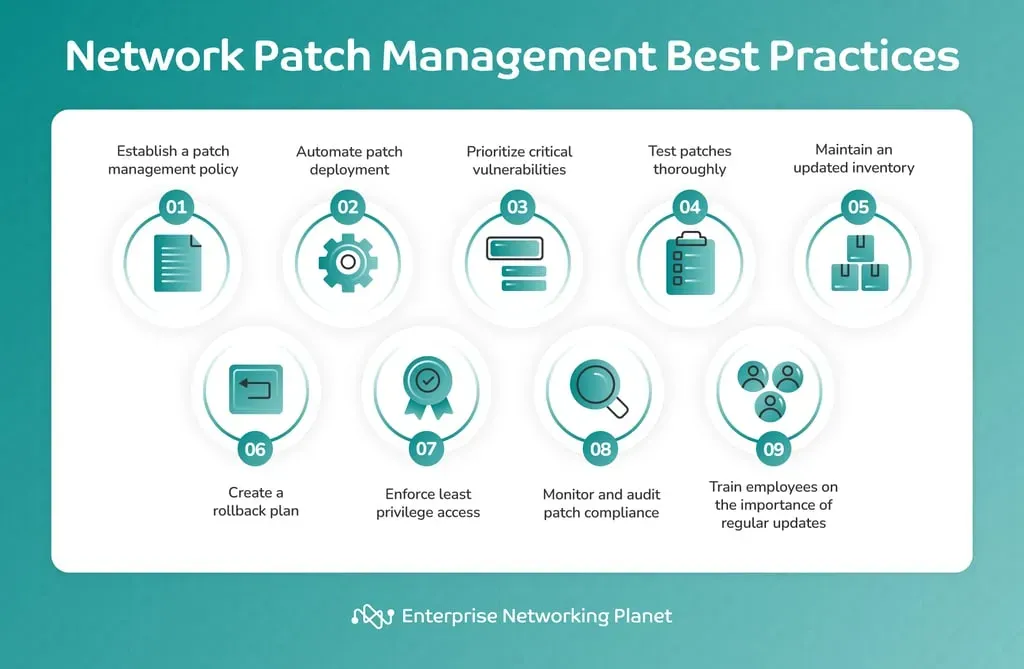
Patch management best practices help organizations protect systems, data, and customer trust in today’s increasingly digital environment, especially for modern enterprises. By treating patches as a strategic security discipline, teams reduce exposure, minimize disruption, and maintain compliance across devices and cloud services, including mobile and on-premises assets. A core component is the patch management lifecycle, which guides discovery, testing, deployment, verification, and rollback to ensure repeatable outcomes and steady governance. Automation enables scalable, error-resistant workflows that accelerate remediation without sacrificing system stability or visibility for leadership and auditors. Organizations should align patch cycles with business priorities and risk tolerance to realize measurable security gains across the IT estate.
In practice, this means coordinating software updates, security patches, and configuration changes as part of a formal remediation program. A mature approach treats vulnerability management as a partner to patching, with complete visibility into asset inventories, risk scoring, and timely remediation. By aligning update efforts with business priorities and regulatory expectations, organizations strengthen defenses while preserving continuity. This integrated view reduces the attack surface, improves compliance posture, and supports proactive governance across IT, security, and operations.
1. Building a Comprehensive Asset Inventory: The Foundation of Patch Management Best Practices
Effective patch management begins with a complete and accurate asset inventory. Knowing what you have—across endpoints, servers, virtual machines, network gear, and cloud workloads—drives risk-based decision making and prevents blind spots. A rigorous baseline should capture operating systems, installed applications, firmware versions, and current patch levels, because visibility directly influences which systems receive updates and when. Discovery tools that span on-premises and cloud environments help map dependencies, tag assets by criticality, and foster a repeatable patch cycle from which reporting to leadership and auditors can be grounded.
Within the realm of patch management best practices, a strong asset inventory serves as the foundation for risk assessment, patch scheduling, and verification. By continuously updating asset records and correlating them with vulnerability data, organizations can reduce blind spots, streamline remediation, and demonstrate control during audits. A living inventory also enables automated reporting, making it easier to show progress against remediation goals and to adjust strategies in response to evolving threat landscapes.
2. Prioritizing Patches by Risk: Aligning Patch Deployment with Vulnerability Management
Not all patches carry equal risk or business impact. A vulnerability in a legacy application used by a small user group may demand a different priority than a zero-day affecting a widely deployed service. Patch prioritization should balance threat intelligence, vulnerability severity, exploitability, asset criticality, and the potential downtime required for deployment. A risk-based approach ensures scarce IT resources focus on patches that reduce the greatest exposure first, while preserving essential services.
This prioritization approach is tightly aligned with vulnerability management programs. By integrating vulnerability data with patching workflows, organizations can escalate remediation for high-severity vulnerabilities, track progress against risk levels, and coordinate patch windows with business operations. The goal is to reduce exposure efficiently, deliver measurable risk reduction, and maintain resilience across the IT landscape.
3. Establishing a Formal Patch Management Lifecycle: From Discovery to Verification
A formal patch management lifecycle brings consistency, traceability, and accountability to the patching process. The lifecycle typically encompasses discovery and assessment, testing and staging, deployment planning, deployment, verification and reporting, and rollback remediation. Each stage should have clear owners, defined success criteria, and measurable outputs to support audit trails and governance.
By documenting every stage, teams can coordinate with security, operations, and compliance functions and demonstrate auditable change management. The lifecycle enables repeatable patch cycles, clear escalation paths for handling problematic patches, and evidence of progress that leadership and regulators can review. Emphasizing a structured patch management lifecycle is a core component of patch management best practices and feeds into broader vulnerability and risk management activities.
4. Leveraging Patch Management Software and Automation: Driving Efficiency and Scale
Automation is the cornerstone of scalable patch management. Patch management software centralizes patch catalogs across operating systems, applications, and firmware, and automates discovery, testing, deployment, and verification. Such tools provide dashboards that give security and IT operations teams end-to-end visibility and control, reducing manual effort and human error.
Choosing the right patch management software—or a combination of tools—accelerates patch cycles and improves compliance posture. Automated patch management supports faster time-to-patch metrics, actionable deployment data, and continuous improvement insights. In the context of patch management best practices, automation is essential for scale, consistency, and the ability to adapt to diverse and evolving environments.
5. Integrating Patch Management with Vulnerability Management: A Coordinated Defense
Patch management and vulnerability management should operate as a coordinated duo rather than as isolated activities. Vulnerability scanning identifies exposures; patching remedies them. A tight integration ensures that critical vulnerabilities are prioritized, tracked, and validated after remediation, closing gaps in real time and preventing repeat exposure.
Practical integration steps include aligning vulnerability dashboards with patching progress, tying remediation SLAs to risk levels and asset criticality, and automating ticketing and change-control workflows to synchronize patch deployment with approvals. Verifying patch applicability and test outcomes before global rollout helps avoid cross-system issues and improves overall resilience by ensuring that remediation is effective and verifiable.
6. Compliance, Change Control, and Continuous Improvement in Patch Management
Regulatory frameworks and industry standards increasingly require demonstrated control over software updates and vulnerability remediation. Patch management processes should support audit trails, change records, and evidence of timely remediation. To satisfy compliance expectations, teams should maintain detailed patch deployment logs, document testing results, risk-based justifications, and rollback plans, while periodically reviewing policies to address new technologies and threat actors.
Establishing disciplined change control and continuous improvement is essential for long-term success. Best practices include staged rollouts, pilot programs, downtimes communicated in advance, and robust rollback procedures. Measuring performance with metrics such as time-to-patch, deployment success rates, and residual risk helps leadership see value and informs ongoing investments in automation, process refinement, and governance.
Frequently Asked Questions
What are essential patch management best practices for establishing a complete asset inventory and baseline?
Start with an up-to-date asset inventory that covers endpoints, servers, virtual machines, network gear, and cloud workloads. The baseline should document operating systems, installed applications, firmware versions, and patch levels. Use discovery tools that scan both on-premises and cloud environments, map dependencies, and tag assets by criticality to support risk-based decision making and auditable reporting.
How should patch management lifecycle stages align with vulnerability management to prioritize patches effectively?
From discovery to rollback, align the patch management lifecycle with vulnerability management data to prioritize patches. Use threat indicators like CVSS scores, exploit activity, asset criticality, and business impact to determine patch priority, and test patches in a controlled environment before phased deployment to reduce risk.
What role does patch management software play in enabling automated patch management across diverse environments?
Patch management software provides centralized patch catalogs, automated discovery, testing, deployment, and verification across diverse environments. It supports agent-based and agentless approaches, phased rollouts, business-hour scheduling, and rollback capabilities, delivering dashboards that enhance visibility and control. Automation speeds patch cycles and improves compliance by providing actionable deployment metrics and vulnerability trends.
How can organizations integrate patch management with vulnerability management to close gaps and reduce risk?
Integrate vulnerability management with patch management so detections translate into timely remediation. Align dashboards to track patching progress, set risk-based remediation SLAs, automate ticketing and change-control workflows, and verify patch applicability and outcomes before full rollout to avoid cross-system issues.
What controls should be in place for patch windows and change control under patch management best practices?
Define maintenance windows that minimize user impact while ensuring patches are applied promptly, and enforce formal change-control processes. Use staged rollouts with pilots, communicate downtime, prepare rollback scripts, and document approvals and post-deployment results to maintain auditability.
What metrics indicate success in patch management and how can teams drive continuous improvement with automated patch management?
Key metrics include patch deployment rate, time-to-patch, post-patch verification success, rollback frequency, exposure reduction, and compliance scores. Regular reviews with security leadership and business stakeholders—driven by automated patch management analytics and the patch management lifecycle—drive data-backed prioritization, testing improvements, and optimized patch windows.
| Section | Key Points | Benefits / Impact |
|---|---|---|
| Introduction | – Patch management is a strategic security discipline that protects systems, data, and customer trust. – It reduces the window of exposure and supports governance. – As threats and regulations evolve, a structured, repeatable patching process is essential for resilience. | Improved security posture, regulatory compliance, and stronger organizational resilience. |
| 1) Start with a Complete Asset Inventory and Baseline | – Build an up-to-date asset inventory across endpoints, servers, VMs, network gear, and cloud workloads. – Baseline includes operating systems, installed applications, firmware versions, and patch levels. – Visibility enables risk-based decisions and repeatable patch cycles; prevents patching the wrong systems or missing updates. | Prevents blind spots; enables risk-based decisions and reliable reporting for leadership and auditors. |
| 2) Prioritize Patches by Risk and Business Impact | – Not all patches carry equal risk or impact. – Consider threat intelligence, vulnerability severity, exploitability, asset criticality, and potential downtime. – Key factors: CVSS, exploit activity, business process impact, tested patches, maintenance windows, rollback risk. | Allocates resources to patches that reduce the greatest risk first; aligns with vulnerability management. |
| 3) Establish a Formal Patch Management Lifecycle | – Lifecycle typically includes discovery, testing, deployment, verification, and rollback. – Details per stage: Discovery (identify patches, assess applicability); Testing (mirror production, check compatibility); Deployment planning (phased rollout, patch windows, rollback); Deployment (apply patches, automate where possible); Verification and reporting (confirm installation, monitor, update records); Rollback and remediation (revert quickly, address root causes). | Provides consistency, traceability, and auditable changes; supports governance and measurable results. |
| 4) Leverage Automation and Patch Management Software | – Automation centralizes patch catalogs, discovery, testing, deployment, and verification; dashboards provide visibility and control. – Key capabilities: centralized catalogs across OSes/apps/firmware; agent-based and agentless options; phased rollouts; scheduling; alerting, rollback, and verification. – Automation speeds patch cycles, reduces manual errors, and improves compliance; enables data-driven improvement. | Faster patch cycles, fewer errors, better compliance; provides metrics for continuous improvement. |
| 5) Integrate Patch Management with Vulnerability Management | – Treat patching and vulnerability management as a coordinated duo. – Vulnerability scanning identifies exposures; patching remedies them. – Steps: align dashboards, remediation SLAs by risk/asset, automate ticketing/change workflows, verify applicability and test outcomes before global rollout. | Closes gaps, reduces risk, and promotes efficient operations. |
| 6) Plan for Compliance and Auditing | – Regulatory frameworks require demonstrated control over software updates and remediation. – Maintain audit trails, change records, and evidence of remediation. – Actions: detailed deployment logs, testing results, risk-based justifications, rollback plans; executive reports on coverage and risk reduction. | Demonstrates control; enhances audit readiness and governance confidence. |
| 7) Establish Patch Windows and Change Control | – Define maintenance windows that minimize user impact while ensuring timely patching. – Enforce change-control: patches approved, tested, deployed, and documented. – Practices: staged rollout with pilots, low-usage scheduling, downtime communication, rollback scripts, post-deployment review. | Reduces surprise outages and boosts confidence in patching as a core capability. |
| 8) Measure Performance and Continuously Improve | – Track metrics such as deployment rate by asset type, time-to-patch (MTTP), post-patch verification success, rollback frequency, exposure reduction, and compliance scores. – Regularly review with security leadership and stakeholders; use insights to adjust prioritization, testing, and patch windows. | Drives a data‑driven, iterative improvement cycle aligned with threats and business goals. |
Summary
HTML table with key points on Patch management best practices