
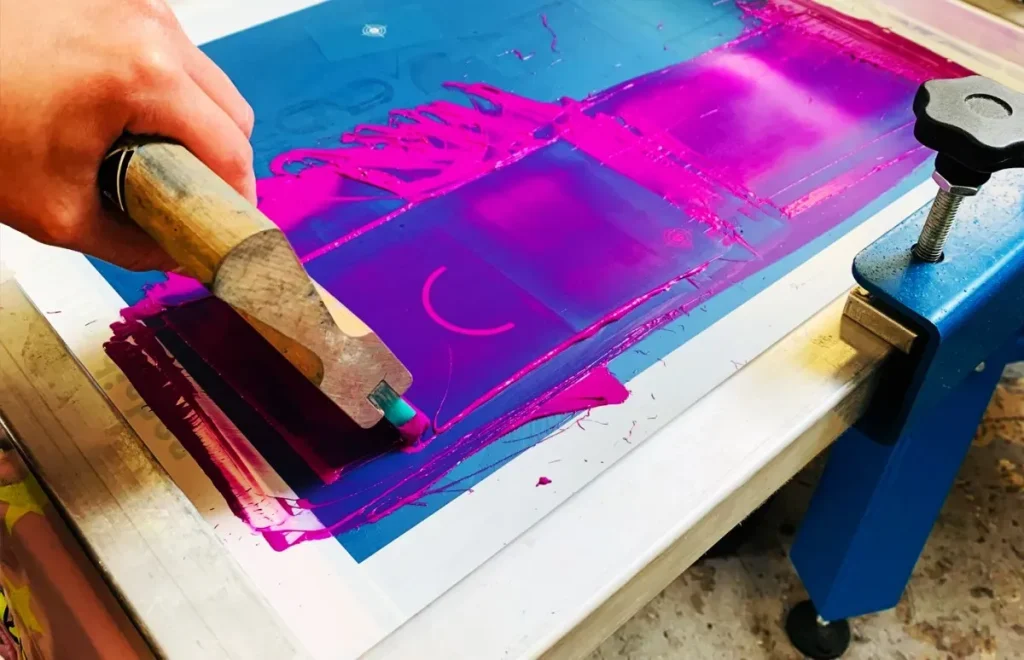
Screen printing techniques have endured as a versatile method for apparel, posters, and custom goods. Understanding the silkscreen printing process helps explain why ink saturation in screen printing matters for color depth and durability. A steady emulsion and exposure workflow determines the stencil’s clarity, affecting edge sharpness and the fidelity of the final print. Choosing the right screen printing inks and matching them to substrate and mesh count is essential for consistent saturation across runs. With a thoughtful screen printing workflow and careful curing, you can achieve repeatable results that stand up to washing and wear.
In other words, this long-standing silk screen approach relies on a carefully prepared stencil, a mesh frame, and steady ink transfer. Think of it as a graphic reproduction technique where colors are layered one by one, with precise alignment and proper holdout to preserve clarity. Practical tips include selecting compatible substrates, matching ink viscosity to the mesh, and designing separations that respect the capabilities of traditional screen printing. From workflow to curing, the same principles apply, translating into vivid images, durable finishes, and scalable production across garments and posters.
Mastering the Silkscreen Printing Process: Screen Printing Techniques to Elevate Your Output
The silkscreen printing process is a stencil-based method that pushes ink through a mesh screen onto a substrate. Understanding the core components—the screen, mesh count, emulsion, and a squeegee—helps you leverage screen printing techniques to achieve consistent results. When you study this process, you begin to see how each element influences how ink sits on fabric or paper, contributing to color clarity and durability. Mastery comes from balancing art and chemistry, from artwork alignment to ink flow and edge definition.
By focusing on the fundamentals of the silkscreen printing process, printers can translate bold art into repeatable results. Proper registration and a clean, even coat of emulsion set the stage for crisp edges and reliable saturation across runs. As you refine your workflow, you’ll notice crisper lines and richer color when the squeegee pressure and angle are tuned to the substrate and ink you plan to use. This foundation underpins every successful print and invites experimentation with different substrates and inks.
Emulsion and Exposure: The Cornerstones of Crisp Stencil Creation
Emulsion and exposure determine where ink will transfer and how sharply your design will render. Coating screens with a uniform layer of emulsion creates the stencil, while controlled exposure through a positive film hardens the emulsion in desired areas. Achieving even coverage requires careful drying and proper exposure times, because underexposed areas can accept too much ink and blur details, while overexposed areas may crack or wash out under pressure.
A precise balance in emulsion chemistry and timing translates directly into print quality. When you align artwork and expose accurately, you maximize the fidelity of fine lines and gradients, reducing halos and ghosting. This corner of the process is where preparation meets technique, and small adjustments in exposure can yield noticeable gains in sharpness and repeatability during production.
Selecting Screen Printing Inks for Saturation and Durability
Ink choices directly affect saturation, opacity, and washfastness on different substrates. Plastisol inks are known for strong color lift and vibrant saturation on cotton and blends, while water-based inks offer a softer hand and breathability on natural fabrics. Discharge inks, when compatible with the garment, can yield very high saturation with a vintage feel. Each ink type has curing requirements and a print window, so understanding substrate and ink formulation is essential. When aiming for saturated colors, consider mesh count, stencil thickness, and squeegee durometer in addition to the ink formulation. The goal is consistent ink transfer across the entire print surface while maintaining edge crispness.
To maximize saturation, consider the consistency and behavior of your screen printing inks with respect to the substrate and design. Aligning ink viscosity to the mesh and ensuring proper mixing minimizes pigment separation and linting. Selecting the right ink system also affects drying time and wash resistance, which are crucial for long-lasting apparel and posters.
The Screen Printing Workflow: Setup, Printing, Curing, and Quality Checks
A smooth screen printing workflow begins with a clean workspace, calibrated off-contact distance, and a test print to verify color density and registration. Establishing a consistent routine—from frame prep to ink mixing—helps maintain repeatable results across runs and reduces downtime. Regular checks during setup, including squeegee angle, flood cycles, and substrate temperature, keep saturation and edge definition stable.
Curing is the final stage that locks in saturation and durability. Different inks require different curing profiles — infrared heat, conveyor dryers, or heat presses — and the temperature-time curve must be closely followed. Inadequate curing can lead to poor adhesion and early cracking, diminishing the perceived quality of the screen printing technique. Once cured, inspect the print for even saturation, edge crispness, and any misregistrations. Small adjustments (such as resetting the off-contact or rechecking the squeegee angle) can make a big difference in repeat runs.
Registration, Edge Crispness, and Ink Saturation in Screen Printing Multi-Color Runs
Multi-color designs demand rigid alignment and careful registration. Precise placement of each color layer ensures that lines stay sharp and that ink saturation in screen printing remains consistent across layers. Practically, this means using registration marks, consistent off-contact, and dedicated screens per color to maintain color density and saturation in complex prints.
Maintaining saturation across layers requires respecting mesh count, stencil thickness, and holdout between colors. Adequate holdout prevents bleeding between color planes while keeping the overall depth and brightness of the design. As layers build, you’ll appreciate how proper registration and edge crispness preserve legibility and visual impact, especially on textiles and posters.
Troubleshooting and Advanced Techniques to Maximize Saturation and Quality
Even experienced printers encounter issues. Underexposed screens can produce faint lines or halos, while overexposure can soften edges and cause washout. Pinhole defects often point to dust or uneven emulsion coverage. A controlled test strip helps fine-tune exposure, ink viscosity, and squeegee pressure, supporting a more repeatable screen printing workflow. The more you document and test, the quicker you can pinpoint the source of saturation problems.
Advanced approaches—such as using underprints and overprints, halftones, and specialized inks (metallics, discharge blends)—can yield depth and saturation that elevate the final product. Color management, per-color screens, and consistent drying times contribute to predictable results, even on challenging substrates. This section emphasizes ongoing experimentation and careful measurement to push the limits of ink saturation in screen printing.
Frequently Asked Questions
What is the silkscreen printing process and how does it influence ink saturation in screen printing?
The silkscreen printing process uses a mesh screen to transfer ink through a stencil onto a substrate. Ink saturation is driven by mesh count, stencil thickness, emulsion quality, and printing parameters like squeegee pressure and off-contact; selecting the right mesh and adjusting pull pressure helps achieve even saturation and crisp edges.
How do emulsion and exposure affect stencil quality and ink saturation in screen printing?
Emulsion and exposure determine which areas of the stencil accept ink. Proper exposure prevents ghosting and pinholes, preserving edge sharpness and consistent saturation. Always run exposure tests, use clean positives, and monitor washout and cure to ensure reliable ink transfer.
Which screen printing inks are best for achieving durable ink saturation on cotton fabrics?
Plastisol inks offer strong color lift and high saturation on cotton and blends, while water-based inks give a softer hand with good saturation on natural fibers. Match viscosity to the mesh, choose appropriate curing profiles, and consider substrate color to maintain vibrant, durable results.
What is an effective screen printing workflow to maximize color saturation and registration across multiple colors?
A solid screen printing workflow starts with clean prep, accurate artwork separations, and precise registration. Use correct off-contact, flood between pulls, apply even squeegee pressure, and cure per ink guidelines. Regular inspection ensures consistent saturation and sharp edges across colors.
What are common issues with ink saturation in screen printing and how can you troubleshoot them?
Common problems include underexposed screens, overexposure, pinholes, and ink viscosity that’s too high or too low. Run controlled test strips to tune exposure and viscosity, clean screens between runs, check substrate temperature, and verify color separations are aligned to prevent gaps and halos.
What advanced techniques in screen printing inks and workflow can maximize saturation and detail while keeping edges sharp?
Advanced approaches include multi-color setups with strict registration, using dedicated screens per color, and controlled drying times. Experiment with halftones, gradients, underprints/overprints, and different ink types (plastisol, discharge, metallics) to deepen saturation while preserving crisp edges and legibility.
| Section | Key Points |
|---|---|
| Introduction | • Screen printing techniques are versatile for apparel, posters, and custom goods; durable results. • Combines art, chemistry, and workflow decisions. • Focuses on core concepts from screens to saturation to improve ink consistency, color accuracy, and overall print quality. • Suitable for both newcomers and established studios; aims include crisper images, richer color saturation, and efficient production. |
| Understanding the screen printing process | • Stencil-based method: ink is forced through a mesh screen onto a substrate. • Key components: screen, mesh count, emulsion, squeegee. • Goals: saturate prints with sharp edges; align artwork; apply even emulsion; control squeegee pressure. • Result: durable silkscreen prints that resist cracking and washing. |
| Artwork preparation and the stencil creation | • Design prep matters: clean vector outlines, proper color separations, sensible stroke width. • Stencil is created by coating with emulsion and exposing to light; exposure determines hardened vs soft emulsion. • Critical to expose correctly; underexposure causes haziness, overexposure reduces fine lines and risks washout. • Emulsion chemistry knowledge informs practical exposure timing. |
| Inks and substrates: choosing the right materials for saturation | • Ink types: Plastisol (strong color lift), water-based (soft hand, breathable), discharge inks (high saturation, vintage feel). • Each has curing requirements and a print window; substrate matters. • For saturation: match mesh count, stencil thickness, squeegee durometer, and ink viscosity to achieve even coverage and sharp edges. |
| The printing workflow: setup, print, cure, and inspect | • Establish a clean workspace and correct off-contact distance. • Test print to verify color density and registration. • Registration is critical for multi-color designs; apply even pressure; flood between pulls. • Curing profiles vary by ink; ensure proper temperature-time; inspect for even saturation, edge crispness, and misregistrations; adjust off-contact or squeegee angle as needed. |
| Troubleshooting common issues in screen printing techniques | • Underexposed screens yield faint lines; overexposed screens block fine details. • Pinhole defects from low emulsion coverage or dust. • Inconsistent saturation from aging inks, poor mix, or high viscosity for the mesh. • Tips: run controlled test strips; clean screens; check substrate cleanliness/temperature; verify color separations and holdout for each layer. |
| Advanced techniques to maximize saturation and quality | • Multi-color designs require rigid process control: color management, dedicated screens per color, and consistent drying times. • Halftones/gradients achieved via mesh choice, post-exposure debubbling, and viscosity tuning. • Specialty inks (metallics, discharge blends) offer striking saturation with careful calibration. • Underprints/overprints can add depth while preserving legibility. |
| Maintenance, workflow optimization, and sustainability | • Sustainable practices: efficient ink usage, waste management, and responsible disposal of emulsions/ cleaners. • Regular screen cleaning and reclaiming; store screens dry and dust-free. • Optimized workflow reduces setup time and waste while preserving high print quality. |
| Conclusion | • Mastery in screen printing techniques comes from continual refinement of process, materials, and attention to detail to produce consistent saturation, sharp edges, and durable silkscreen prints. |
Summary
Conclusion: Mastery in screen printing techniques comes from continual refinement of process, materials, and attention to detail to produce consistent saturation, sharp edges, and durable silkscreen prints.