
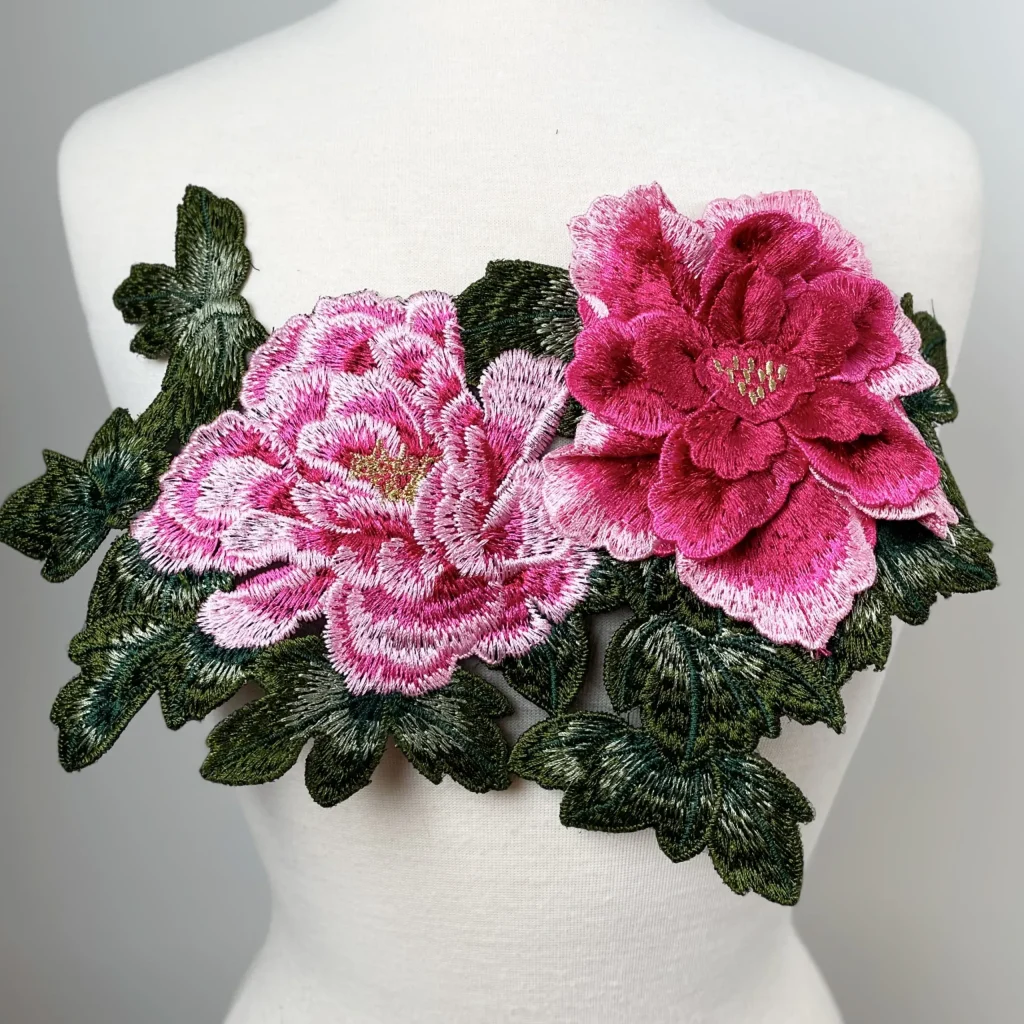
3D Embroidered Appliqué opens a tactile world where fabric becomes sculptural, turning simple cutouts into living textures that invite closer inspection, spark curiosity, and inspire experimentation with fiber, color, and contrast; it blends traditional appliqué concepts with a contemporary sense of form, so a flat motif can feel almost alive in three dimensions, inviting a maker to touch, study, and reinterpret the work as it grows. By using layered stitching and careful stabilization, designers can build multiple fabric layers, padding, and subtle underlays to create raised petals, leaves, or abstract forms that rise from the base, catching the light from different angles and producing gentle shadows that enhance readability and texture while remaining durable over time. This approach elevates traditional appliqué with a dimensional feel that suggests movement and volume, inviting touch and guiding the eye to travel across height differences, shadowed edges, and delicate color transitions while preserving durability through thoughtful stabilizer use and flexible backing that allows the piece to lie flat when needed. In this introductory guide you will discover the tools you need, plus a practical, step-by-step process to build layered depth into your projects through careful stitching sequences, fabric selection, trial swatches, and a habit of documenting your color shifts and layer order for consistency. The goal is to design pieces that feel alive, with texture that rewards close looking and a sense of movement that keeps your audience engaged, whether displayed on a wall, stitched into a garment, or framed as a textile sculpture.
This approach can also be described as three-dimensional embroidery built from a base applique and elevated fabric layers. Think of it as stitched sculpture, where color, texture, and form emerge through stacked motifs, padding, and careful edge work. Reframing the idea as raised fabric motifs in textiles allows you to plan shading, height, and light reflection without sacrificing durability. Using related terms such as fabric relief, multi-layer applique, and dimensional stitching helps connect the concept to broader embroidery techniques while keeping the focus on tactile depth.
What is 3D Embroidered Appliqué? Understanding Layered Stitching and Depth
3D Embroidered Appliqué is a textile art technique that adds depth and texture by layering stitched shapes on fabric. This approach relies on layered stitching to build height, using different fabrics, padding, and careful stabilization to keep each layer crisp. The base applique acts as a platform for additional shapes, and the raised elements interact with light to create a dimensional impression.
Understanding this concept helps you design pieces that read as stitched sculpture rather than flat decoration. By planning the number of layers, where edges curve, and how color shifts will read in shadow, you can model petals, leaves, or abstract forms with tangible depth. In practice, layering is a core appliqué technique that elevates ordinary textures into a sense of motion and life within the fabric.
Layered Stitching Techniques that Build Depth in Appliqué
Layered stitching techniques are the engine behind depth in appliqué projects. Use padded satin stitches and a thin piece of batting behind edges to raise shapes from the base, while underlays guide curvature and keep lines clean. This approach is a central part of dimensional embroidery, where height is built deliberately rather than by loose stitching.
Color and stitch variety across layers create shadows and highlights. A top layer with a crisp satin edge can be paired with a lighter underlayer to simulate light fall, and metallic threads can catch the light along raised contours. This is a practical exploration of appliqué techniques that produces rich depth in embroidery.
Tools and Materials for Dimensional Embroidery and 3D Appliqué
Tools and materials for dimensional embroidery are chosen to support height and stability. Start with a stable base fabric and a top fabric for each piece, plus an appropriate stabilizer (cutaway or tear-away) to prevent puckering and provide a solid platform for raised layers. Precision tools like sharp embroidery needles and a frame keep layers aligned.
Expand your toolkit with a selection of embroidery threads—cotton floss, variegated shades for shading, and even metallics for highlights. Transfer tools, temporary adhesives, scissors, and optional padding such as batting or felt complete the setup. Each item supports the layered stitching that defines 3D embroidery and other appliqué techniques.
Designing for Height: Color, Shadows, and Layer Order in Embroidery
Designing for height begins with planning. Start with base shapes and decide where padding and underlays will live to add height. Strategic layer order affects how light and shadow move across the piece, turning simple shapes into dimensional embroidery that reads with depth and contour.
Color choices amplify depth. Use slightly darker tones on lower layers and lighter tones on upper layers to simulate natural lighting, and keep notes of color relationships to sustain harmony across layers. Practice with mockups to forecast how the final piece will appear in real light.
A Step-by-Step Practice for Creating a 3D Embroidered Appliqué Project
A practical workflow for a simple flower design built with layered stitching follows a Step-by-Step approach. Begin with design and pattern preparation, choosing the number of layers and which elements become raised; then prepare the fabric and stabilizer, hoop tightly, and baste or fuse layers as needed. This planning ensures each layer has a clear role in the final depth.
Progress through cutting, placing, stitching the base layer, adding raised layers with padding, and building texture with veins or highlights. Finish by trimming stabilizer, pressing from the back, and optionally backing or framing to preserve the dimensional effect.
Troubleshooting, Finishing, and Care for Durable Layered Embroidered Art
Troubleshooting helps preserve depth in embroidery. Puckering often results from insufficient stabilizer or overly tight stitches; edges can fray if not finished; bulk occurs when stacking many layers on large shapes. Solutions include increasing stabilization, switching to sturdier fabrics, and using temporary baste to keep layers aligned during stitching.
Finishing and care for durable layered embroidered art involve thoughtful handling. Remove excess stabilizer, press gently from the back, and consider a light fabric sealant to preserve depth in pieces that see regular use. For wearables, choose fabrics and threads that withstand washing, reinforce raised edges, and avoid over-washing to maintain color and dimensional integrity.
Frequently Asked Questions
What is 3D Embroidered Appliqué and how does layered stitching add depth in embroidery?
3D Embroidered Appliqué is a textile art technique that builds depth by layering stitched shapes on fabric. Using layered stitching, padding, and multiple fabric layers creates raised elements that read as dimensional embroidery, transforming traditional appliqué into a stitched sculpture.
How do layered stitching techniques create depth in 3D Embroidered Appliqué?
Depth in embroidery comes from stacking layers with padding behind edges, varying stitch types and thread weights across layers, and applying subtle color changes to mimic shading. In 3D Embroidered Appliqué, these layered stitches produce height, contour, and a sense of dimension.
What tools and materials are essential for achieving dimensional embroidery in 3D Embroidered Appliqué?
A stable base fabric and top layers, appropriate stabilizer (cutaway or tear-away), an embroidery hoop, sharp embroidery needles (size 70–90 for fine work), a range of threads (cotton, variegated, metallic), pattern transfer tools, temporary adhesive, scissors, and optional padding such as batting or felt.
What is the role of stabilization and padding in depth in embroidery for 3D Embroidered Appliqué?
Stabilization provides a solid platform to prevent puckering and to keep layers aligned, while padding adds height behind edges to define contour. Together they support layered stitching and preserve the dimensional embroidery effect.
Can you outline a step-by-step approach to building layered depth in 3D Embroidered Appliqué?
Follow these steps: Step 1 design and pattern prep; Step 2 prepare fabric and stabilizer and hoop; Step 3 cut and place base shapes and secure with temporary adhesive; Step 4 stitch the base layer; Step 5 add the first raised layer with padding behind the edge; Step 6 build middle and top layers with color shifts and careful edges; Step 7 add texture and detail; Step 8 finishing: remove from hoop, trim stabilizer, press from the back, and add backing or framing as desired.
What finishing tips help preserve the dimensional embroidery effect in 3D Embroidered Appliqué for quilts and garments?
Finish by removing excess stabilizer, trimming edges, and pressing from the back with a gentle setting to avoid crushing layers. Reinforce raised edges, choose fabrics and threads with good colorfastness, and consider a light fabric sealant to minimize snagging and preserve depth during use and washing.
| Aspect | Key Points |
|---|---|
| Overview | 3D Embroidered Appliqué adds depth and texture by layering stitched shapes on fabric. Uses layered stitching, multiple fabrics, and stabilization to create raised elements; elevates traditional applique with tactile dimension and movement. The guide covers what it is, why it works, tools needed, and a step-by-step process to build layered depth. |
| Understanding | Not simply placing a fabric cutout; uses multiple fabric layers, padding, and embroidery stitches to create dimension. Base acts as a platform for additional shapes; each layer adds height and shadow; result reads as stitched sculpture. Layered stitching shapes contour design (curves, petals, leaves, abstract forms) with depth. |
| Depth and Texture | Depth adds tactile appeal; edges can curve away and catch light. Achieved with underlays, padding stitches, and careful color changes to mimic shading. Depth equals height plus nuance; start with simple designs and add layers gradually. |
| Tools & Materials | Stable base and top fabrics; stabilizer (cutaway/tear-away); embroidery hoop/frame; needles (size 70–90, larger for thicker layers); threads (cotton floss, variegated, metallic); marking tools; temporary glue; scissors; padding (batting, felt, interfacing). |
| Creating Layered Structure | Plan base shapes first; decide padding/underlays; order of layering affects final read. Use mockups/diagrams to stay organized. |
| Layered Stitching Techniques | Padded satin stitches with underlying padding; add height with batting/felt; gradient/shadow via different stitches; color changes for shading; metallic threads add highlights; stitch density and height boost 3D effect. |
| Step-by-Step Project | Step 1–8: design pattern, prepare fabric/stabilizer, cut/place base shapes, stitch base layer, add raised layers, build middle/top layers, add texture, finishing touches; include padding and edge care. |
| Troubleshooting & Best Practices | Puckering from insufficient stabilizer or over-tight stitching; reinforce edges; prevent fraying; manage bulk by trimming and spacing layers; secure layers with temporary basting; longer stitch length for thicker fabrics; maintain color harmony with notes. |
| Creative Applications | Versatile on home textiles, fashion, and framed canvases; ensure wash/wear compatibility; reinforce edges; seal depth with light fabric sealant; avoid over-washing; choose colorfast fabrics. |
Summary
3D Embroidered Appliqué is a rich, tactile textile technique that transforms flat fabric into dimensional, sculptural art. By layering underlays, padding, careful color choices, and a deliberate stitching plan, you can create pieces where light, shadow, and texture interplay to bring flowers, leaves, and abstract forms to life. Start with simple shapes and gradually build layers to develop depth, then experiment with stitch types, thread weights, and fabric choices to enhance the dimensional effect. This method expands the possibilities of applique, suitable for home textiles, wearables, and framed works, delivering a durable, expressive art form that stands out in any project.