
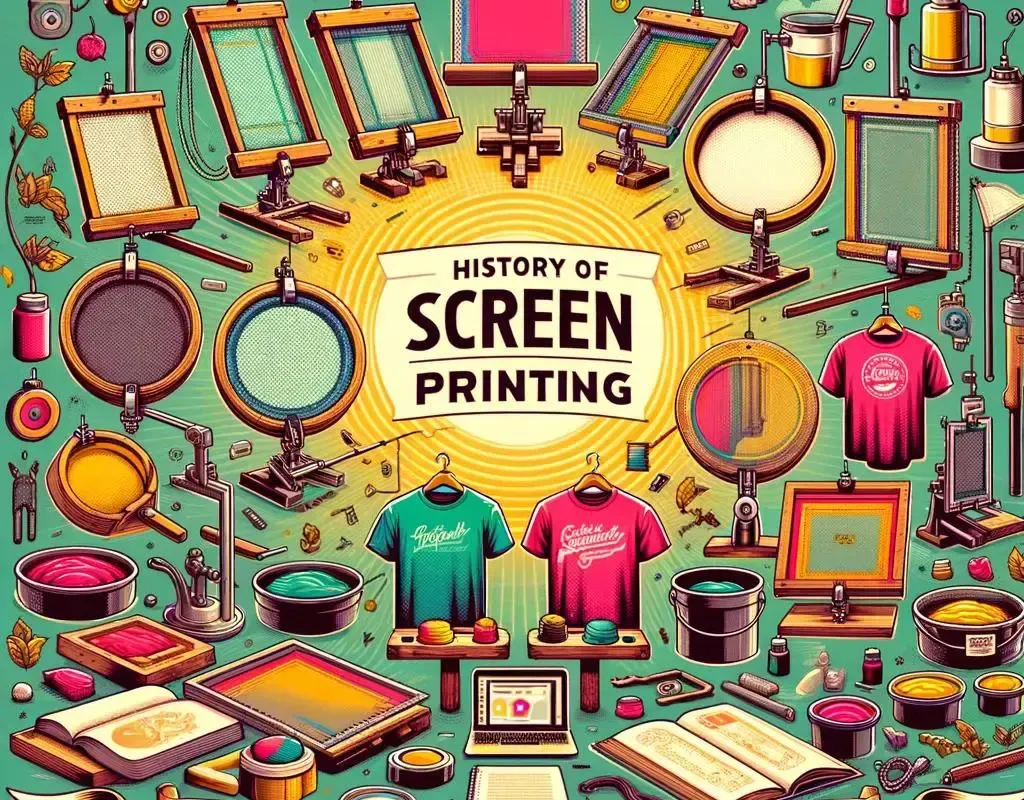
The history of screen printing is a dynamic story of art meeting technology, entrepreneurial spirit, and a relentless drive to reproduce images with color and clarity. From early poster art that advertised cinema and community events to today’s vibrant textiles and fashion collections, this practice evolved from a practical craft into a global industry. Over time, advances in emulsions, inks, and workflow tools sharpened print registration and color separations, enabling larger runs while preserving detail and accessibility. Its versatility made it central to poster art movements, then to screen printing apparel, and finally to a wide range of branding, signage, and wearable graphics worldwide. Understanding this history involves not only techniques like screen printing techniques and the idea of serigraphy history, but also how culture, commerce, and media have shaped color, texture, and mass communication.
Seen through a broader lens, this craft emerges as a form of printmaking that transfers pigment through stencils onto fabrics, walls, and substrates, often traced back to the silkscreen tradition when used in early posters and signage. In contemporary discourse it is frequently described as serigraphy, a distinction that emphasizes artistry alongside production efficiency. In the apparel and branding world, the same method is discussed as wearable graphics, textile printing, or graphic screen printing. Collectively, these terms reflect an interconnected web of techniques, media, and markets that shape how audiences experience color, texture, and visual communication.
The History of Screen Printing: From Poster Art Roots to Modern Apparel
The history of screen printing is a story where craft meets technology, spanning cultures and decades. From early stencil-inspired methods in Asia to the silk screens that dominated Western printmaking, this technique grew from practical origins into a global visual language. The interplay between art, commerce, and accessible media shaped how images could reproduce with color and clarity across posters, fabrics, and signage. Over time, it evolved from a craft practiced in studios to a scalable process that underpins modern apparel and currency of mass communication.
As the technique matured, poster art became a central conduit for experimentation and dissemination. The bold color fields, layered inks, and crisp edges achievable with screen printing helped democratize art and design, making visually striking graphics affordable for broad audiences. This evolution also marks the emergence of serigraphy as a parallel path—an artistic lineage within the broader history of screen printing—while the core method continued to drive the textile and garment industries, embedding screen printing in everyday fashion and graphic culture.
Origins and Early Techniques in Screen Printing
Origins trace a practical idea: use a mesh screen to control where ink passes through and where it is blocked. The earliest forms relied on hand-cut stencils and natural fibers, with silk screens playing a pivotal role in traditional textile and paper printing across Asia. As the method crossed into the Western world, innovators refined emulsions, inks, and squeegees, enabling bolder designs, sharper edges, and more reliable repeatability. This section highlights how these early screen printing techniques laid the groundwork for a scalable craft that could meet growing demand.
The key components—mesh, stencil, and ink—gradually evolved. Traditional silk gave way to polyester and other synthetics, opening possibilities for finer detail and higher mesh counts. Inks expanded beyond simple pigments to include plastisol, water-based, and discharge varieties, each suited to different substrates and textures. The workflow—from coating emulsions to exposing and washing out stencils, to aligning substrates and squeegeeing ink—became a repeatable process that could handle posters, fabrics, and other surfaces at increasing speeds.
Poster Art, Social Impact, and the Visual Language of Printmaking
Poster art emerged as a driving force in the early to mid-20th century, with governments and private studios using screen printing to communicate messages, advertise events, and shape public discourse. The method’s capacity for bright colors and crisp lines on affordable substrates made it ideal for widespread dissemination during the Great Depression and beyond. In this context, screen printing became less a niche craft and more a powerful tool for mass communication and cultural expression.
The process offered practical advantages for poster design: repeatable imagery, layered color separations, and the ability to build depth through successive ink applications. This visual language—bold typography, high contrast, and efficient production—carried into broader graphic design practices and later influenced wearable graphics. As screen printing moved from posters to textiles, the enduring link between poster art and screen printing apparel helped define a shared vocabulary of color, composition, and cultural storytelling.
Serigraphy History: From Industrial Practice to Fine Art
Serigraphy history marks the emergence of a distinction between commercial screen printing and fine art applications. As artists began to adopt screen printing for non-commercial purposes, the technique gained status in museums and galleries, where it could be used to reproduce paintings, experiment with texture, and push the boundaries of graphic form. This shift broadened public perception of screen printing from a purely industrial process to a versatile medium for artistic exploration and serial production.
In contemporary practice, serigraphy enables artists to explore expressive surfaces, rich color fields, and experimental textures while maintaining the transferable benefits of screen printing. Galleries and collections increasingly feature serigraphs alongside traditional prints, illustrating how the method supports both mass reproduction and unique, high-detail artworks. This dual role—commercial utility and artistic experimentation—helps explain the enduring relevance of serigraphy history within the broader landscape of printmaking.
Screen Printing Apparel: From Graphic Tees to Global Fashion and Sustainability
The mid-20th century marked a turning point when screen printing moved decisively into apparel. Clothing brands discovered that hand-printed tees and other garments could carry bold, affordable imagery with lasting impact. In the United States and Europe, this shift aligned with a culture eager for expressive fashion, and the technique was well suited to layering colors and applying complex designs onto fabrics. As a result, screen printing apparel became a cornerstone of both streetwear and mainstream fashion.
Today, the emphasis on durability and color saturation continues to drive innovations in inks and workflow. Plastisol inks delivered vibrant opacity for mass production, while water-based and discharge inks offer softer hand feel and distinctive tonal effects on fabric. Modern practice also emphasizes sustainability—eco-friendly inks, waste reduction, and optimized press operations—without sacrificing the tactile, color-rich aesthetics that define wearable graphics.
The Digital Age and Beyond: Hybrid Methods, Innovation, and Cultural Impact
Digital design tools, color separation software, and on-demand printing have complemented traditional screen printing rather than displaced it. Designers can plan complex multi-color jobs with precision, visualize separations, and modify artwork rapidly, all while preserving the tactile quality that makes screen printing distinct. This convergence of digital pre-press and traditional printing expands capabilities for both posters and screen printing apparel, enabling more customized and sustainable production models.
Looking forward, hybrid methods and digital-direct-to-screen workflows promise to extend creativity and efficiency. Emerging approaches aim to balance speed with sustainability, reduce waste, and strengthen supply chain transparency. Across poster art, fashion graphics, and fine-art serigraphy, the future of screen printing rests on preserving its characteristic texture and color richness while embracing responsible practices, continuous learning, and new materials that broaden what the craft can express.
Frequently Asked Questions
What is the history of screen printing and how did poster art influence its development?
The history of screen printing began in Asia with stencil-like methods and grew in the West in the early 20th century. By the 1920s–30s, improvements in emulsions, inks, and squeegees made the process faster and more reliable. Poster art helped popularize screen printing, pushing it from a crafts practice toward large-scale, affordable reproductions.
How have screen printing techniques evolved from traditional stencils to today’s multi-color prints?
Screen printing techniques evolved from hand-cut stencils and silk screens to photo-emulsions, finer meshes, and advanced inks. The 1920s–30s saw key advances in emulsions, exposure methods, and squeegee tech, boosting accuracy and speed. These changes enabled high-quality posters and, later, textile printing, shaping the broader history of screen printing.
What is serigraphy and how does its history fit into the broader history of screen printing?
Serigraphy is the artistic branch of screen printing, highlighting the serigraphy history as distinguished from commercial print runs. Over time, serigraphy broadened the medium into galleries and limited editions while the main history of screen printing remained rooted in mass production. This dual track shows how art prints and industrial printing share the same technique but different aims.
When did screen printing shift from posters to apparel, and what milestones defined screen printing apparel?
Screen printing shifted from posters to apparel in the mid-20th century as fabrics became canvases for bold graphics. Garment printers could deliver expressive imagery at scale, meeting demand for affordable fashion. Plastisol inks and automated presses were key milestones in screen printing apparel within the broader history.
How did poster art contribute to the social impact of screen printing during the 20th century?
Poster art played a central social role during the 20th century, using screen printing to communicate civic messages and artful design. Government programs and private studios used bold, accessible posters to reach broad audiences, illustrating the impact of poster art on culture. This is a core aspect of the history of screen printing.
What key materials and innovations shaped the history of screen printing?
The history of screen printing was shaped by materials and innovations: silk to polyester meshes, emulsions, and a range of inks (plastisol, water-based, discharge). Exposures, pre-press workflows, and automatic presses boosted speed, accuracy, and volume. Together, these advances defined screen printing techniques and expanded its capabilities across substrates.
| Topic | Key Points | Impact/Notes |
|---|---|---|
| Origins and Early Techniques | Silk/Asia; stencil-based printing; early Asian forms; Western development in the 20th century; emulsions, inks, squeegees in the 1920s–1930s; rise of mass media; shift from artisanal craft to industrial production. | Founded the basis for rapid reproduction and mass production; enabled global adoption and later industrial scale. |
| Poster Art and Social Impact | Surge during the Great Depression and New Deal; posters used to disseminate information and promote events; bold colors on affordable substrates; accessible to artists; tied to mass communication. | Showed screen printing’s social reach and its role in graphic design history; democratized imagery. |
| Techniques, Materials, and Innovations | Stencil-based workflow; mesh historically silk; emulsions; photo-emulsion; inks (plastisol, water-based, discharge); substrates (paper, fabric); improved registration; industrial presses. | Core workflow enabling reliability, scalability, and commercial viability. |
| From Poster Art to Apparel | Mid-20th century shift to apparel/fabric design; layering colors; cross-pollination with poster art; iconic graphics in fashion; democratization of art-on-clothing. | Expanded market and cultural impact; art with everyday wear. |
| Serigraphy and the Language of Printmaking | Term serigraphy; distinction between commercial and fine art; used in museums/galleries; reproducing oil paintings; exploring textures. | Elevated screen printing to an artistic medium beyond industrial use. |
| Modern Apparel and the Industrial Era | Late 20th century dominance in graphic apparel; plastisol inks; automated presses; sustainable technical improvements; 1960s-70s cultural energy; art-on-clothing movement. | Apparel as primary vehicle for graphic screen prints; high-volume production. |
| The Digital Age and Sustainable Practice | Digital design tools; color separation; eco-friendly inks; sustainability; on-demand printing; waste reduction; water-based and discharge inks; streamlined workflows. | Integration with digital workflows and sustainability focus; modern practices. |
| Cultural Significance and Future Prospects | Screen printing as a cultural narrative; democratization; hybrid printing; digital-direct-to-screen; future of speed vs sustainability; global reach. | Continuing relevance with adaptable technologies and ethical considerations. |
Summary
In the history of screen printing, we see a journey from ancient stencil practices to contemporary fashion, revealing how a simple mesh and ink can shape culture across decades. The history of screen printing is also a story of technology, artistry, and entrepreneurial spirit evolving through materials, inks, and workflows. From poster art to mass-produced apparel, this narrative demonstrates how accessibility and innovation converge to create powerful visuals on diverse substrates. By understanding this history, designers and enthusiasts can appreciate not just how a print is made, but why it endures: bold color layering, durable textures, and the enduring dialogue between art and everyday life.