
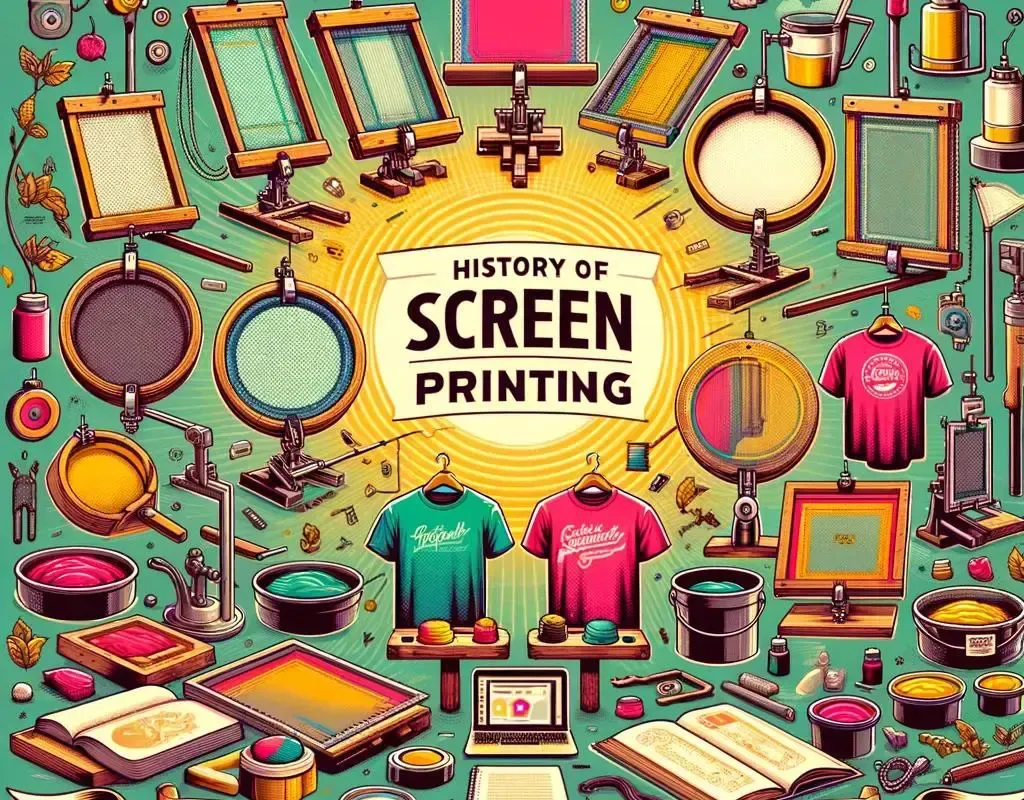
The history of screen printing traces a rich path from ancient stencil crafts to modern printmaking, shaping visual culture along the way. From early silk screen printing on fabrics to today’s multi-color posters, the technique has evolved through innovations in inks, meshes, and printing methods. Origins in Asia set the framework with fabric frames and pigment blocks, while later generations turned toward reproducible imagery and access for a wider audience. Over time, advances in emulsions and color separation refined the craft, moving it from artisan practice toward broader production. Today, screen printing art thrives across textiles and paper, highlighting its durable, expressive potential.
Viewed from another angle, this versatile process is a mesh-and-ink workflow that blends hands-on craft with scalable production. Often called the silkscreen or stencil-print method, it remains a graphic reproduction technique that relies on a frame, mesh, and ink. The approach enables layered color work and crisp lines, making it popular for posters, textiles, and art editions alike. Modern studios integrate digital design tools to plan color separations, then translate them into the classic screens that carry ink onto diverse substrates. Whether described as a printmaking method, a screen-based reproduction process, or a poster-and-fabric workflow, the core idea is consistent: ink, image, and substrate co-create the final piece.
History of Screen Printing: Origins, Silk Screen Printing, and Global Evolution
The history of screen printing stretches from ancient stencil crafts to bold, mass-produced imagery. Its roots lie in Asian textile traditions where designers used frames and porous fabrics to control pigment flow, creating layered designs on cloth. That early form set the stage for silk screen printing, a term that nods to silk mesh and the tactile, handmade quality that remains a touchstone for contemporary practice.
Western adoption in the early 20th century brought new business models and artistic ambitions. The ability to reproduce images across multiple pieces made screen printing attractive to advertisers, poster shops, and then artists seeking reproducible graphics. This cross-cultural exchange seeded a practice that would fuse craft with industrial methods, influencing both commercial printing and the ascent of screen printing in art circles.
Silk Screen Printing: From Silk Mesh to Reproducible Imagery
Silk screen printing hails from the use of silk mesh stretched over frames. The mesh acts as a stencil carrier, enabling precise deposition of ink onto textiles and other substrates. The term silk screen printing reflects this traditional material, but the underlying concept—blocking ink where the design isn’t meant to pass—remains universal in every era of screen printing.
As the technique traveled, artisans learned to adapt fibers and frames, making the process more durable and scalable. Across cultures, this method allowed repeated motifs and bold graphics, a kinship with the later pop art explorations that would elevate screen printing as a democratic medium for visual ideas.
Modern Screen Printing Techniques: Emulsions, Meshes, and Color Separation
The mid-20th century introduced photo-emulsion, a watershed moment in screen printing techniques. Exposing a light-hardened layer through a film positive produced intricate stencils and enabled accurate color separations for multi-color prints. This shift—often called the photo-screen process—revolutionized speed, precision, and the ability to reproduce complex imagery across editions.
Mesh material evolved from silk to nylon and polyester, providing dimensional stability and predictable tension. Printers could choose mesh counts to balance detail and ink viscosity, unlocking more complex images on textiles, paper, and plastics. This era gave way to modern screen printing methods that blend technical control with expressive design.
Materials, Inks, and Substrates in Modern Methods
A practical workflow covers meshes, emulsions, inks, and substrates. Plastisol inks deliver vibrant, durable finishes on fabrics, while water-based inks offer a softer hand and lower environmental impact. The choice of ink and substrate shapes the character of the final print and reflects evolving screen printing techniques.
Curing methods, textile handling, and substrate preparation are essential for consistent results. The choice of solvent systems or UV-curable inks depends on material, desired longevity, and end-use—factors that illustrate how materials and methods have evolved within the history of screen printing and continue to adapt to new markets.
Screen Printing Art: From Warhol to Contemporary Editions
Screen printing art transformed the relationship between originality and multiplicity. In the 1960s, artists leveraged the reproducibility of silk screen printing to critique mass culture and to produce accessible imagery, as seen in the works of Warhol and his contemporaries. The history of screen printing in fine art became inseparable from questions of editioning, authorship, and public reception.
Today, screen printing art extends beyond poster shops into gallery editions, installations, and fashion collaborations. The technique’s bold color blocks, crisp lines, and layered textures enable contemporary artists to explore identity, politics, and perception through repeatable imagery while preserving a hand-crafted sensibility.
Practical Guide for Makers: Designing, Separating, and Printing
A maker’s workflow begins with a design, followed by color separation and a film positive that becomes the stencil mask on the emulsion-coated screen. Exposure, washing, and ink selection determine how faithfully the final print matches the original image. Understanding these steps is central to mastering screen printing techniques and achieving consistent results.
Registration, curing, and finishing complete the process, with an emphasis on safety and sustainability. Inspecting the print, documenting edition numbers, and planning for color consistency across a run reflect the disciplined craft described in the history of screen printing while embracing modern screen printing methods for scalable production.
Frequently Asked Questions
How did the history of screen printing begin with silk screen printing and evolve toward mass production?
The history of screen printing begins in Asia with fabrics dyed through screens made from silk mesh in what we now call silk screen printing. Over time the technique moved west and evolved into a method for repeatable images, paving the way for commercial posters and early art prints.
What role did photo emulsion play in the history of screen printing and how did it affect screen printing techniques?
The invention of photo emulsion in the mid-20th century transformed screen printing techniques by enabling photographic image transfer and precise color separations. This milestone is central to the history of screen printing and to modern screen printing methods.
How did the art world shape the history of screen printing, particularly through screen printing art and artists like Warhol?
In the art world, screen printing art gained legitimacy through bold graphics and editioned works, with Warhol popularizing the approach as a serious art medium. The era broadened the history of screen printing to galleries and mainstream culture and highlighted questions of reproducibility.
What are the core elements of modern screen printing methods, and how do they reflect the history of screen printing?
Modern screen printing methods blend traditional craft with scientific control: frames, emulsions, mesh, ink, squeegee, and curing are still used, but digital design, color separations, and precise registration shape outcomes. This reflects the ongoing history of screen printing.
How is sustainability influencing modern screen printing methods and the broader history of screen printing?
Sustainability now guides ink choices, emulsions, and waste reduction in screen printing, with water based inks and low-toxicity formulations becoming common. These shifts are part of the modern history of screen printing as materials and practices evolve.
How did the transition from silk to synthetic meshes influence the history of screen printing and its techniques?
The transition from silk to synthetic meshes such as nylon and polyester increased durability, tension, and print consistency, marking a pivotal moment in the history of screen printing and its techniques.
| Aspect | Key Points |
|---|---|
| Origins and Silk Screen Printing | – Traces to old stencil techniques in Asia (China/India) using fabric screens over frames. – Silk screen name derives from traditional silk mesh. – Core idea: block design on screen; press ink through open areas to transfer an image. – Early forms were slower but enabled repeated images and broader reach. |
| Industrialization, Photo Emulsion, and the Rise of Modern Methods | – Mid-20th century: photo-emulsion processes allow light exposure to create complex stencils, speeding production and enabling color separations. – Silk meshes gradually replaced by nylon/polyester for durability and tension control. – These advances moved screen printing from craft to mainstream manufacturing and art. |
| The Art World Embraces Screen Printing | – Screen printing matured as a fine-art medium in the mid-20th century. – Pop Art era (e.g., Warhol) demonstrated its power for bold graphics, reproducibility, and cultural commentary. – The technique’s editioning and accessibility broadened its use from posters to fashion and installations. |
| Techniques, Materials, and Process | – Core setup: frame, screen with stencil, ink, squeegee, substrate. – Workflow: design -> film positive -> expose screen -> wash to reveal stencil. – Mesh counts affect detail vs. ink deposition; material choices (nylon/polyester) impact durability and tension. – Inks vary (plastisol, water-based, solvent-based); curing methods differ by substrate (textile vs. paper). – Printing presses range from hand-pulled to automated for scale and consistency. |
| Modern Methods and Sustainability | – Digital design tools enable precise color separations and planning. – Technology supports limited editions, custom textiles, and experimental surfaces. – Sustainability focus: lower-toxicity inks, water-based inks, and mindful materials usage. |
| The Art, the Craft, and the Audience | – Screen printing sits between craft and fine art, offering bold color, crisp lines, and reproducibility. – Its democratic nature allows wide access while preserving editioned value. – A disciplined workflow (preparation, exposure, printing, curing, finishing) enables repeatable experimentation and texture through layered inks. |
| Practical Insights for Makers and Collectors | – Practitioners choose materials and methods based on substrate, scale, and audience. – Accurate registration, clean edges, and well-marked editions signal quality. – Collectors value a print’s editioning, documentation, and evidence of controlled production. |